Ten Minutes, Two Islands, One Sky: The Kanmon Strait's Best Kept Sunset Secret
Photo: Ciara Ní Riain, CC BY-SA 4.0, via Wikimedia Commons
There's a moment on the Kanmon Ferry — usually about three minutes in, somewhere between the mooring lines of Shimonoseki and the cranes of Moji — when the whole strait turns the color of a grapefruit. The water glows. The bridge overhead catches fire with reflected light. And the salaryman next to you doesn't even look up from his phone, because for him this is just Tuesday.
For you, it's the best sunset cruise deal in western Japan. Total cost: a few hundred yen. Tour boats in this part of the world charge upwards of 4,000 yen for essentially the same view.
The Cheapest Boat Ride in Japan (That Doesn't Feel Cheap)
The Kanmon Ferry isn't a tourist attraction — that's exactly why it works. It's a working commuter crossing that has shuffled pedestrians and cyclists between Shimonoseki on Honshu and Moji on Kyushu for the better part of a century. The crossing takes about ten minutes, and the boats run regularly throughout the day, from early morning until evening.
You don't book anything. You don't reserve anything. You just walk up, buy a ticket (cash or a prepaid transit card), and step aboard. Cyclists roll their bikes on. Kids on the way home from school grab the railings. It's the kind of unpolished, everyday travel experience that organized tours spend thousands trying to simulate.
And then there's the view.
Timing the Golden Hour
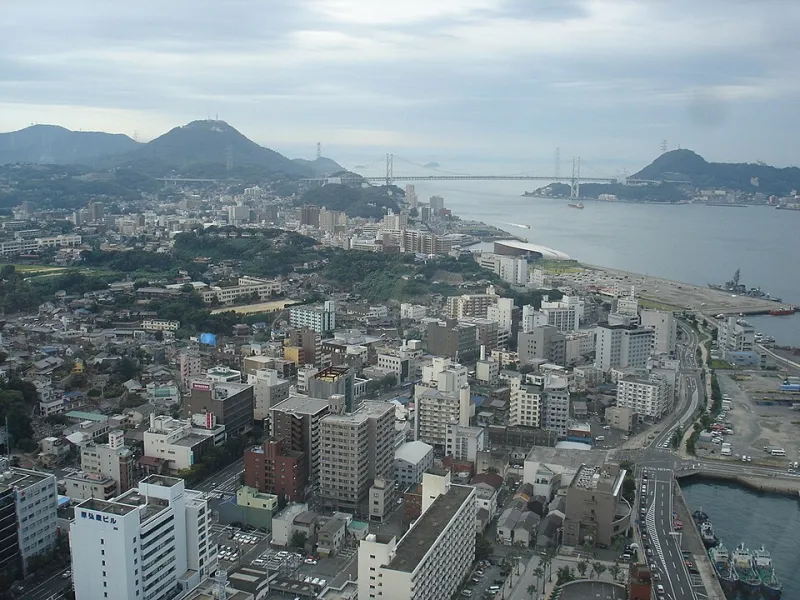
The Kanmon Strait runs roughly east-west, which means the setting sun drops behind the hills of Kyushu and lights up the sky over the water. The Kanmonkyo Bridge — the big suspension bridge spanning the strait — becomes a silhouette against the glow, and the water turns to hammered copper.
To catch it, check local sunset times (they swing from around 5 p.m. in winter to past 7 p.m. in summer) and aim to board about 30 to 45 minutes before the sun goes down. That gives you time to ride one direction, grab a snack on the far side, and ride back as the sky peaks.
A few practical notes:
- Board on the Shimonoseki side if you can. The terminal sits near the Akama Shrine area, and the western-facing views improve as you approach Kyushu.
- Sit outside if the weather allows. The outdoor decks are open-air and breezy — bring a light layer even in summer.
- The strait is a working waterway. Freighters, fishing boats, and the occasional naval vessel all share the channel, so there's always something moving in your frame.
Shooting the Crossing
You don't need a fancy camera. A phone will do, but a few tricks help:
Shoot toward the light, then away from it. The backlit silhouette of the bridge is the classic shot, but the real magic is often the warm light raking across the water and the Moji waterfront behind you. Turn around.
Use the railing. The boats are small and the deck is steady, but leaning on the rail stabilizes your shot during the engine's hum.
Embrace the crowd. A commuter's silhouette at the rail adds scale and story. This isn't a charter boat — it's a crossing, and the photos should feel like it.
When You Land: Moji After Dark
Timing your ride for the evening has a built-in payoff: you arrive in Moji's retro port district right as it lights up. The red-brick warehouses around Mojiko Station have been converted into restaurants and shops, and the whole area glows with warm bulbs after dark.
Grab a curry from the famous station platform stand, or hunt down a nikuman (steamed pork bun) from a street stall. If you've still got room, the banana-themed sweets here are a local institution — a nod to Moji's history as Japan's banana import hub.
Cross back on the last ferry and you'll get the strait a second time, now under blue hour, with the bridge lit up like a string of pearls.
Why This Beats Any Tour
There's a certain kind of traveler who books a sunset dinner cruise and spends the whole time photographing the buffet. Then there's the kind who rides a working ferry with a bag of convenience-store snacks and watches two islands trade places in the golden light.
The Kanmon Ferry costs less than a fancy coffee back home. It runs on a schedule built for locals, not tourists. And the view — the bridge, the strait, the freighters, the sky — is exactly the same one the tour boats sell.
Sometimes the best cruise in Japan is the one that was never trying to be one.