Two Cities, One Commute: What Kanmon Locals Really Say About Life on the Strait
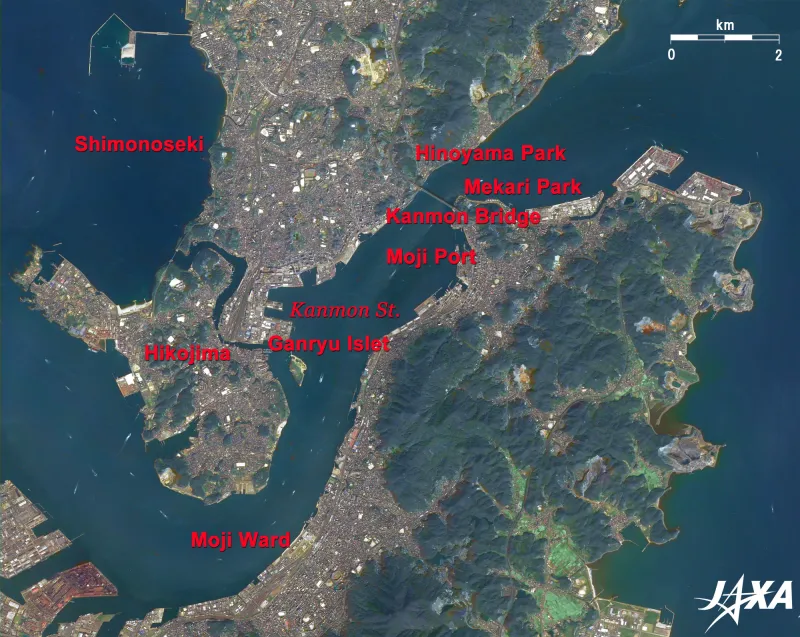
Photo: Kanmon Strait ferry crossing between Shimonoseki and Kitakyushu Japan, via www.eorc.jaxa.jp
Stand on the Shimonoseki waterfront any weekday morning and you'll notice something guidebooks never mention: the strait isn't a barrier here. It's a hallway.
Ferries chug back and forth. Trains slip into the undersea tunnel. Cars pour across the Kanmonkyo Bridge. And a steady stream of people who live on Honshu work on Kyushu — or the other way around — make the crossing like it's no more remarkable than driving across town.
For American travelers, the Kanmon region often shows up as a connector: the place between Fukuoka and Hiroshima where you change trains or spend a night eating fugu. But spend a couple of days here and you start to understand that this is one of the only places in Japan where two major islands function like neighboring boroughs. We talked with locals on both sides of the water about what that actually feels like.
The Commute That Goes Underwater
The Kanmon undersea tunnel has a pedestrian walkway — you may have read about walking it yourself — but for locals, the real story is the daily flow of commuters and students who cross beneath the strait without ever thinking twice.
"My colleagues in Kitakyushu think it's exotic that I live 'in another island,'" a Shimonoseki resident told us, laughing. "It takes me twenty minutes. My sister in New Jersey commutes longer into Manhattan."
That's the mental shift worth making as a visitor: the strait functions less like the divide between two regions and more like the Hudson River between New York and New Jersey. There's water in the middle, sure, but the cultural distance is measured in minutes, not miles.
A Baseball Rivalry With a Beach Between It
Every metro area has its allegiances, and the Kanmon region is no different — except here, the rivalry is split by an entire island boundary. Shimonoseki leans toward the Hiroshima Carp, while Kitakyushu folks often back the Fukuoka SoftBank Hawks.
Ask around a Karato Market food stall or a Mojiko izakaya and you'll get playful, unapologetic trash talk. "Carp fans are romantic," one Kitakyushu bartender told us. "Hawks fans are realistic." He would not elaborate, and he did not need to.
If you're visiting during baseball season, catching a game at a local izakaya — where the TV is on and everyone has an opinion — is one of the fastest ways to feel the region's personality. It's the Japanese equivalent of a Cubs–Cardinals divide, just with better snacks.
The Great Food Debate (It Never Ends)
Here's where things get genuinely heated.
Shimonoseki claims fugu, obviously — it's the blowfish capital of the country, and nobody on the Honshu side apologizes for it. Kitakyushu counters with its own arsenal: Kokura's yakiudon, Mojiko's retro café culture and banana-stuffed everything, and the sheer density of great cheap eating around the Kokura station area.
"They have one fish," a Kokura native told us. "We have everything else."
"Their everything else is fine," a Shimonoseki fishmonger shot back when we relayed the comment. "But nobody flies in from Tokyo for fine."
The honest answer for travelers: you should eat on both sides, and the good news is that crossing takes minutes. Start with a morning at Karato Market on the Honshu shore, then hop over to Mojiko for an afternoon coffee in a century-old brick warehouse. Nobody's forcing you to pick a team.
What They Wish Visitors Knew
When we asked locals what they'd want American tourists to understand, the answers clustered around one theme: don't just pass through.
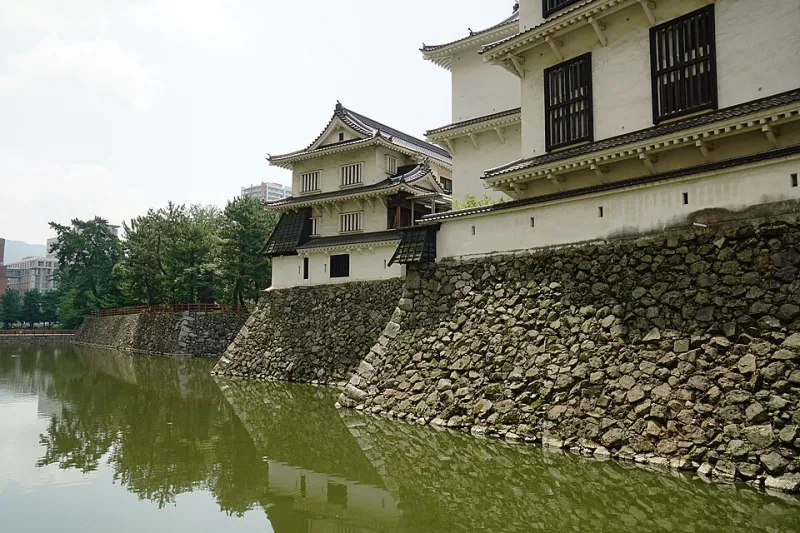
"People get off the Shinkansen at Kokura, see a platform, and leave," one resident sighed. "They don't know there's a castle, a river walk, a whole night market vibe."
From the other shore, the complaint was the mirror image: visitors rush to the fugu restaurants and miss the harbor sunsets, the strait-side walking paths, the little museums.
The consensus from both sides? Give the region two days, not a two-hour layover. Ride the ferry just because it's cheap and the views are absurd. Walk the tunnel for the novelty of it. Cheer for whichever team the bar you're in is cheering for.
The Takeaway for Travelers
The Kanmon Strait is easy to misread from a train window — a stretch of gray-blue water between two bigger destinations. But the people who live here will tell you the crossing is the point. Two islands, two personalities, five minutes apart, arguing about baseball and fish for as long as anyone can remember.
Come for the fugu if you must. Stay for the conversation.