What a Coin, a Fish, and a Lump of Coal Can Tell You About the Kanmon Strait
Every harbor town has a hustle. The Kanmon Strait — the choppy, five-hundred-meter-wide channel that separates the main island of Honshu from Kyushu — has had several, and each one left a receipt.
If you want to understand Shimonoseki and its across-the-water neighbor Mojiko, don't start with castles or temples. Start with money. Follow the cash across four centuries and the whole history of this stretch of water explains itself.
First, the Toll Booth
Long before anyone thought of a bridge, the strait was a chokepoint — literally the only sensible sea route between the Seto Inland Sea and the open ocean west of Japan. Whoever controlled the passage could charge for it.
In the twelfth century, the warlord Taira no Kiyomori squeezed the route hard, taxing shipping to fund his clan. Later, the Mori family, who ruled the Choshu domain from their castle at Hagi, ran the strait like a private business. Foreign and domestic vessels alike paid for safe passage, and the money flowed into the domain's coffers.
Think of it like a medieval version of a turnpike — except the toll plaza was the water itself, and the toll collectors sometimes traveled on armed ships. For a small fishing town, Shimonoseki sat on an extraordinary asset: not land, not gold, but location. That's the first lesson of strait economics. You don't need to produce anything if everything has to pass your front door.
When Fugu Became a Financial Instrument
Fast-forward to the Edo period (1603–1868), and the strait's second currency appears: the tiger pufferfish, or torafugu.
Fugu was a problem fish. Delicious, yes — but toxic enough that serving it carelessly could kill a customer. In fact, when the shogunate's own troops massed near Shimonoseki in the 1600s and soldiers died from eating badly prepared puffer, the government outright banned the fish. Eating fugu became an underground pleasure for centuries.
Shimonoseki's genius was to turn that danger into a brand. The waters around the strait produce some of Japan's finest torafugu, and by the late 1800s — after Japan's first modern prime minister, Ito Hirobumi, famously tasted fugu in Shimonoseki and lifted the ban — the town positioned itself as the only place worth eating it. The fish wasn't just dinner; it was a premium product with a geographic monopoly, like Champagne or Idaho potatoes.
Today, Shimonoseki still lands the majority of Japan's wild-caught fugu, and Karato Market is the visible tip of that economy. When you watch an auction there in the morning, you're watching the modern version of a trade that's been minting local money for well over a century.
Coal, Brick, and Boom Times Across the Water
Meanwhile, on the Kyushu side, a different commodity was about to make a different fortune.
In the 1860s, coal was discovered at Takashima near Nagasaki, and soon the Chikuho coalfield — one of Japan's largest — was feeding a hungry industrializing world. Where did all that coal go? Through the strait. Mojiko, sitting right at the narrows on the Kyushu shore, became the loading dock.
By the early twentieth century, Mojiko was one of Japan's busiest ports, exporting coal to Shanghai and beyond. The red-brick warehouses and the gorgeous Moorish-style former Mitsui OSK Lines office that tourists photograph today weren't built for postcards. They were built by coal money. The port even ran regular international ferry routes, making it a little window of cosmopolitan bustle on the edge of Kyushu.
Then, as every one-commodity town learns, the commodity moved on. Oil replaced coal in Japan's energy mix by the mid-twentieth century, the mines closed, and Mojiko's boom went quiet. The bricks stayed. That's the bittersweet half of the story you can still walk through on any afternoon.
Three Currencies, One Narrow Stretch of Water
Put the three eras side by side and a pattern emerges:
- Tolls — charging for passage itself
- Fugu — charging for something only these waters produce
- Coal — charging to move what someone else produced
Each is a different answer to the same question: how does a town with no farmland and no industry survive? The strait's answer was always be useful — as a gatekeeper, a fishery, or a freight dock.
Why This Matters on Your Trip
Here's the fun part: you can spend a single day touching all three of these economies.
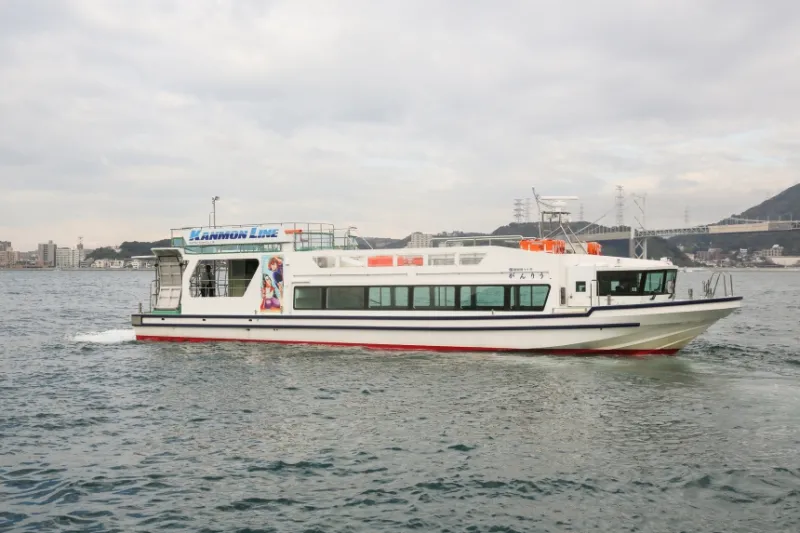
Start at Karato Market, where the fugu trade is still a living business — watch the auctions, then eat the product at a counter overlooking the water. Walk the waterfront past Shimonoseki's old port buildings, remnants of the same shipping infrastructure that once collected tolls. Then take the short ferry or the undersea pedestrian tunnel across to Mojiko, where the brick warehouses and the Japan Railways museum tell the coal-boom story in brick and rivet.
US travelers often describe this region as a detour between Fukuoka and Hiroshima. It's more accurate to call it a ledger — a place where the money story of western Japan was written in fish, freight, and tolls, and where the receipts are still on display if you know what you're looking at.
Bring coins for the ferry. It's the most historically appropriate way to cross.