Before the Blowfish: How a Fishing Town at the Strait Helped End the Samurai Era
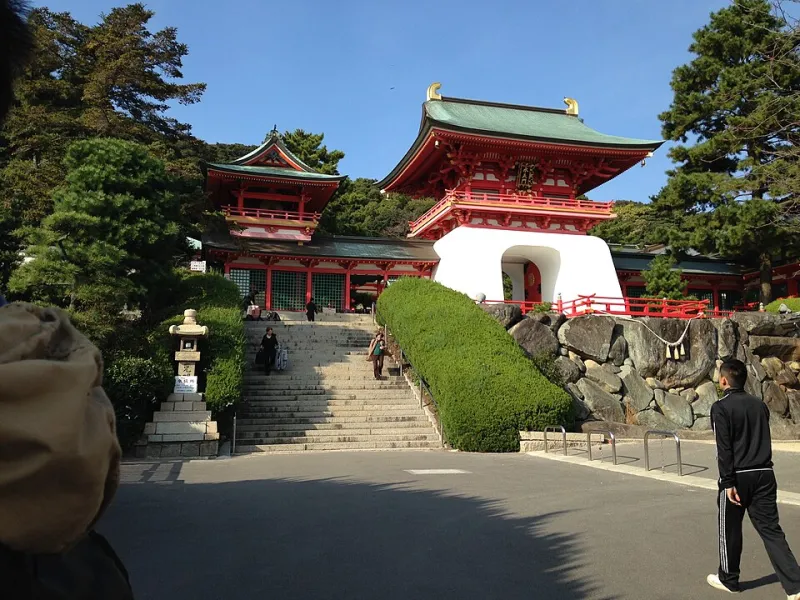
Photo: そらみみ, CC BY-SA 3.0, via Wikimedia Commons
Ask any American traveler why they're headed to Shimonoseki and you'll get the same answer: blowfish. It's the fugu capital of Japan, the place where daring eaters line up at Karato Market for a slice of fish that could, in the wrong hands, stop their heart.
But here's what most visitors miss. Long before pufferfish made this city famous, Shimonoseki was the power base for one of the most consequential clans in Japanese history — the Choshu, the samurai domain that effectively brought down the Tokugawa shogunate and dragged Japan into the modern age. If you've got a day in town beyond the fish market, this is the history worth chasing.
A Strait Worth Fighting Over
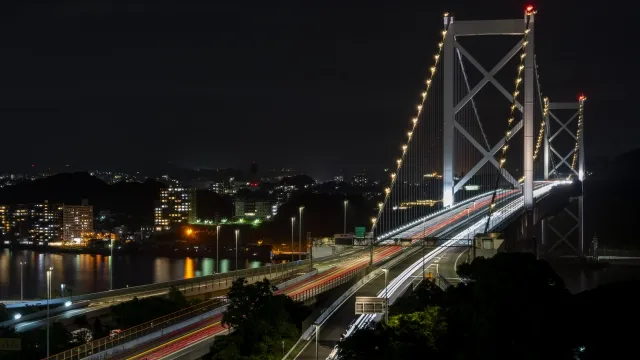
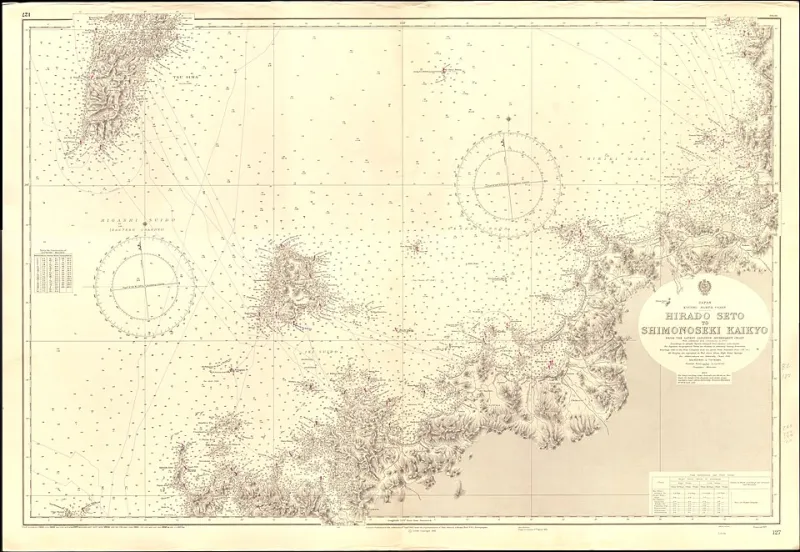
Start with geography, because the Choshu clan did. The Kanmon Strait is the narrow ribbon of water separating Honshu from Kyushu, and for centuries, whoever controlled it controlled the maritime tollbooth between Japan's two largest islands.
The area now known as Akamagaseki was once one of the busiest ports in medieval Japan. Ships bound for Korea and China staged here. Warriors marched through. In 1161, the strait itself became the site of one of Japanese history's most dramatic moments: the Battle of Dan-no-ura, where the child Emperor Antoku drowned and the Taira clan was destroyed by the Minamoto. Local legend says the crab shells in the region still carry the faces of fallen samurai. (Order a heike-gani crab if you see one — the resemblance is genuinely uncanny.)
The Choshu clan, based in nearby Hagi, understood what this strait meant. They stationed officials here, collected fees, and kept a close eye on every hull that passed between the islands.
The Clan That Said No to the Shogun
Here's where the story gets interesting for anyone who slept through their world history class.
When Commodore Perry's black ships steamed into Tokyo Bay in 1853, Japan's feudal government — the Tokugawa shogunate — buckled under the pressure to open the country. Some domains grumbled. Choshu did more than grumble.
From their positions here at Shimonoseki, Choshu samurai fired on Western ships in 1863 and 1864, an act of defiance so audacious it triggered joint retaliation from British, American, French, and Dutch warships. You can still retrace that episode along the waterfront — we've covered the 1864 campaign in detail in a previous piece.
But the real plot twist came after. Humbled by Western firepower, Choshu's leaders did something remarkable: they pivoted. They started secretly sending students abroad, building modern weapons, and forging an alliance with the Satsuma domain in Kyushu — just across the strait. In 1868, Choshu forces helped overthrow the shogunate entirely, launching the Meiji Restoration.
Think of it this way: the American Revolution had its Virginia. Japan's had this stretch of coastline. Men like Ito Hirobumi, Japan's first modern prime minister, came up through the Choshu ranks — and there's a prominent statue of him right in town.
Where to Find the Samurai Legacy Today
The beauty of Shimonoseki's history is that it's walkable. Here's a practical half-day route:
Akama Shrine. This vermilion-lacquered shrine on the waterfront honors Emperor Antoku, the child who drowned at Dan-no-ura. It's atmospheric, free to enter, and a five-minute walk from Karato Market — so you can pair your samurai history with your seafood lunch without breaking a sweat.
The Ito Hirobumi statue and residence sites. Scattered around the city center, these markers connect the dots between the clan's samurai era and Japan's rapid modernization. Ito studied in London as a young Choshu retainer — one of the secret overseas missions mentioned above.
Kozanji Temple. Slightly uphill and easy to overlook, this temple houses the grave of Shimonoseki's foreign merchant quarter and ties to the clan's clandestine trade networks. The grounds are quiet, mossy, and mercifully free of tour buses.
Hinoyama Park. Take the little ropeway up for the payoff view: the entire strait spread out below you, Honshu on one side, Kyushu on the other. From up here, you finally understand the clan's obsession. Control this water, and you control the gateway to western Japan.
Why This History Changes Your Trip
Look, nobody's saying skip the fugu. The blowfish pilgrimage is a legitimate bucket-list item, and Shimonoseki does it better than anyone.
But there's a particular thrill in eating lunch at a market where fishermen have hauled in the day's catch for centuries, then standing on a hilltop above the same strait where samurai once watched for enemy sails. It reframes the city. Shimonoseki stops being a quirky food stop and becomes what it really was: a strategic chokepoint, a rebel stronghold, and the launchpad for modern Japan.
For American travelers used to thinking of samurai history as a Kyoto-and-Edo affair, that's the surprise. The end of the samurai era didn't happen only in Tokyo. It started here, in a port town at the edge of the map, where a clan of fishermen's neighbors decided the old order had to go.
Getting there: Shimonoseki is about two hours from Fukuoka by train, or a quick hop across the strait from Mojiko in Kyushu. Wear comfortable shoes — the best history here is uphill.