Banana Juice and Brick Warehouses: A Half-Day in Mojiko, Kyushu's Forgotten Port
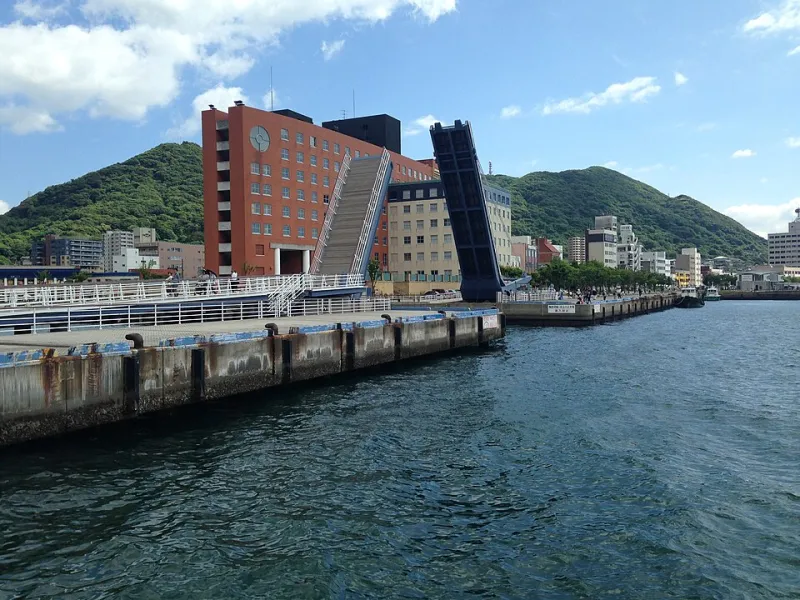
Photo: そらみみ (Soramimi), CC BY-SA 4.0, via Wikimedia Commons
Let's talk about banana juice. Yes, really.
In the port town of Mojiko, on the northern tip of Kyushu, there's a drink that's become a local institution: fresh banana blended with milk into something between a milkshake and a smoothie, served ice-cold in a bottle. It sounds like a gimmick. It is not. It's a delicious inside joke with history behind it, and it's the perfect excuse to visit one of the most charming — and overlooked — districts in western Japan.
A Port That Once Punched Above Its Weight
Mojiko (officially Moji, but locals and signs alike use the retro nickname) opened as an international trading port in 1889. Back then, it was one of the gateways to Asia — steamships hauling coal out and goods in, foreign traders strolling the docks, Western-style buildings rising along the waterfront. In 1905, the town became the Japanese entry point for bananas from Taiwan. Since the port lacked proper refrigeration, porters would ripen the fruit in warm ship boiler rooms, and vendors sold bananas straight off the docks. When the bananas got too ripe to sell, they got blended with milk. Banana juice was born — a thrifty dockworker's solution that became a century-old tradition.
The trade moved on, bigger ports like Kitakyushu's modern terminals took over, and Mojiko settled into a kind of graceful semiretirement. Which is exactly its charm today: the district's Meiji and Taisho-era buildings survived intact, and in the 1990s the area was rebranded as "Mojiko Retro" — a preserved waterfront quarter where you can wander brick warehouses and wooden offices that haven't changed much in a hundred years.
What to Actually Do There
Start at the station. Mojiko Station, completed in 1912, is one of Japan's oldest wooden train stations still standing — a lovely Renaissance-style building that recently reopened after a careful restoration. The waiting room's old ticket office and stained glass are worth ten minutes on their own. Stepping off the train here feels like arriving in a different century.
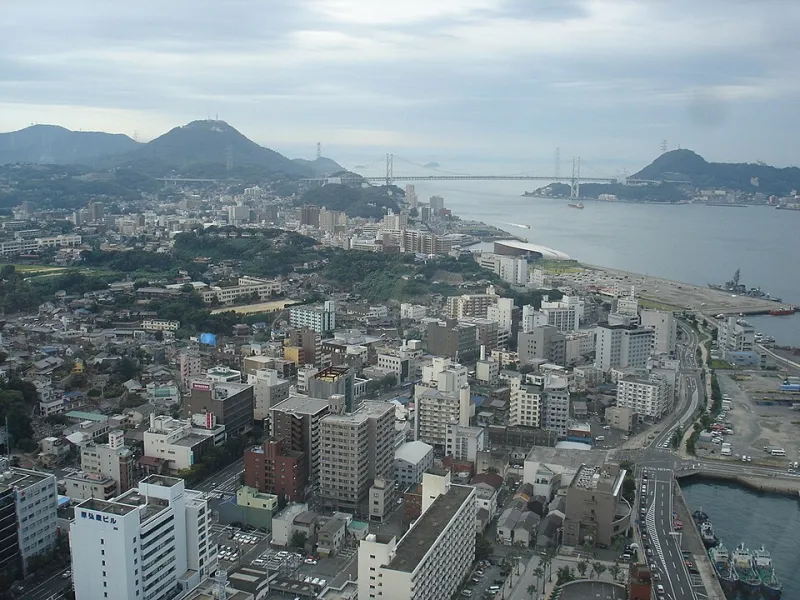
Sip your banana juice. Several shops near the station sell it, but the classic stop is inside the former Osaka Shosen shipping company building (now the Mojiko Retro tourist information center), where the drink was famously popularized. It's creamy, not too sweet, and best enjoyed sitting on the waterfront watching ships cross the strait toward Shimonoseki — which, by the way, you can see from here. You're that close to Honshu.
Tour the buildings. The former Moji Customs building, the old Mitsui O.S.K. Line offices, and the striking blue-domed former Osaka Shosen headquarters line up along the harbor like a film set. Architecture buffs, this is your moment — it's one of the densest concentrations of preserved Meiji-era Western-style buildings in Japan.
Cross the strait on foot. From the Mojiko waterfront, you can walk through the Kanmon Strait Underwater Tunnel — a pedestrian passage beneath the water connecting Kyushu to Honshu. Emerge in Shimonoseki's Karato district, grab sushi at the Karato Market, and boom: you've walked between two of Japan's four main islands before lunch.
Where It Fits in Your Japan Trip
Here's the thing for US travelers: Mojiko slots perfectly into what we'd call the Fukuosa loop — Fukuoka, Kitakyushu, and Shimonoseki. Fukuoka, with its international airport and direct flights from hubs like San Francisco, Seattle, and Honolulu, makes the natural gateway. From there:
- Morning: Train from Fukuoka to Mojiko (about an hour on the JR Kagoshima Line)
- Midday: Banana juice, harbor stroll, warehouse browsing
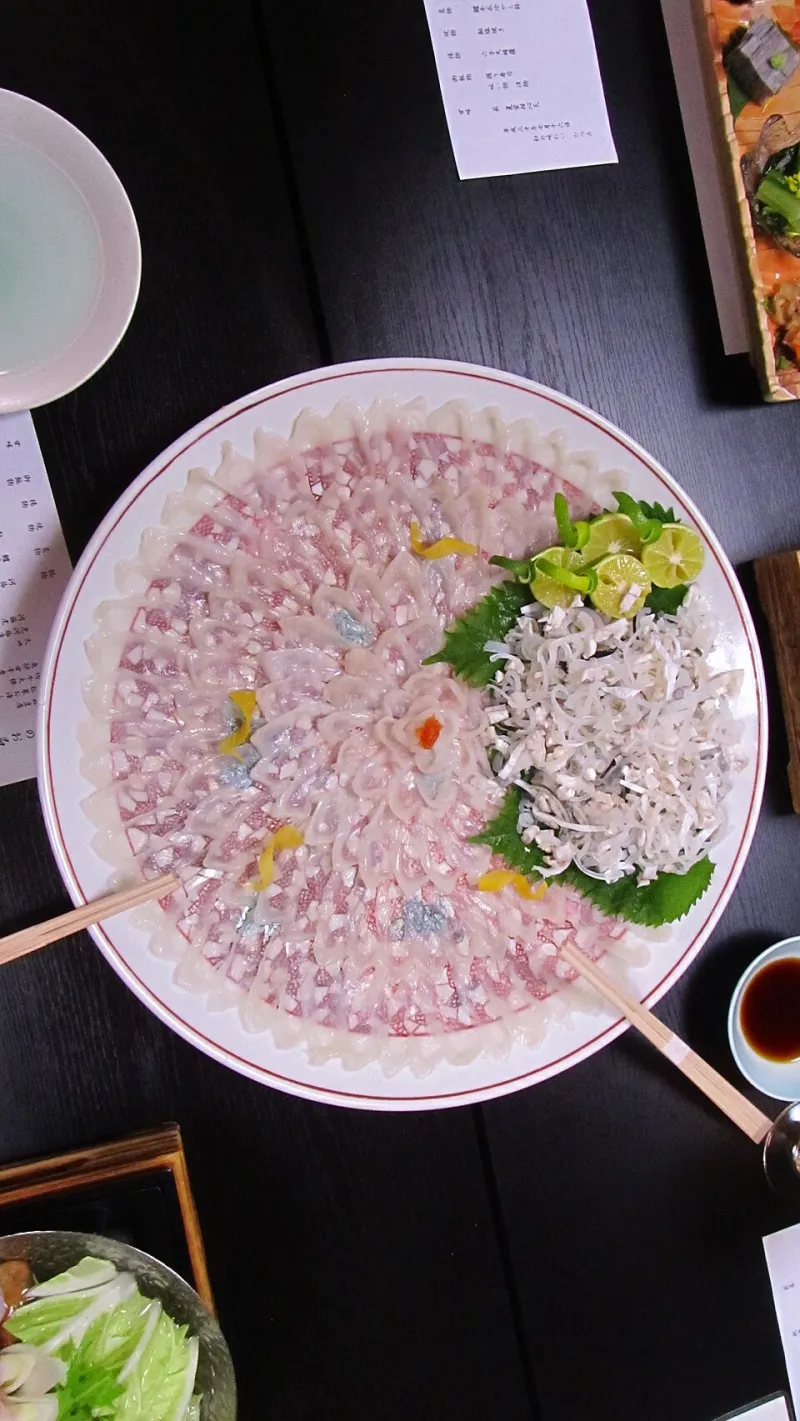
- Afternoon: Walk the undersea tunnel to Shimonoseki, fugu lunch or Karato Market sushi
- Evening: Shinkansen from Shimonoseki back toward Fukuoka, or onward to Hiroshima
It's a half-day that covers two islands, a century of history, and a drink with a backstory — the kind of efficient, off-the-beaten-path travel that makes a Japan trip feel like yours rather than everyone else's.
Mojiko doesn't have the crowds of Kyoto or the neon of Tokyo. What it has is atmosphere you can't manufacture: salt air, brick and timber, and a banana milkshake that started as dockside leftovers. Some traditions deserve to keep going. This is one of them.