Where Empires Signed on the Dotted Line: Shimonoseki's Role in Rewriting Asia
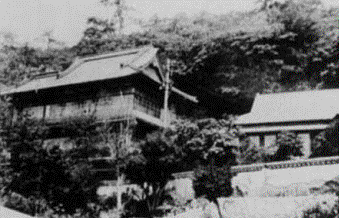
Photo: Government of Japan/Strongold Headquarters, Public domain, via Wikimedia Commons
There's a moment that hits you in Shimonoseki, usually somewhere near the waterfront, when you realize this quiet city of fish markets and fugu restaurants has been pulling levers of world history for over a century. For American travelers used to thinking of Japan's big historical moments happening in Tokyo, Kyoto, or Hiroshima, Shimonoseki is a plot twist.
This is where a war ended. Not just any war — the First Sino-Japanese War, concluded here in 1895 with the Treaty of Shimonoseki. And the ripples from that negotiation? You can still feel them across the Pacific today.
The Treaty That Redrew the Map
Picture it: spring 1895, and delegates from the Qing Dynasty of China sitting down with Japanese statesman Itō Hirobumi in a modest hall in Shimonoseki. The war over Korea was over, and Japan had won decisively. The treaty signed here forced China to recognize Korean independence, cede Taiwan, and open Chinese ports to Japanese trade.
For Americans, the echo is immediate: the geopolitical tremors from that table — the rise of imperial Japan, the eventual road to Pearl Harbor, the contested status of Taiwan — all trace back, at least in part, to this strait-side city.
The building where it happened, Shunpanrō Hall, still stands near the water. It's small. That's the shock of it. No marble colossus, just a wooden structure where the fate of nations got penciled in. Inside, you'll find period documents and exhibits explaining the negotiation, including the rather grim detail that a Japanese assassination attempt on Chinese delegate Li Hongzhang during the talks pressured Japan into softening some terms.
History, it turns out, is often negotiated while the ink is barely dry on something else.
Why Here? The Chokepoint Question
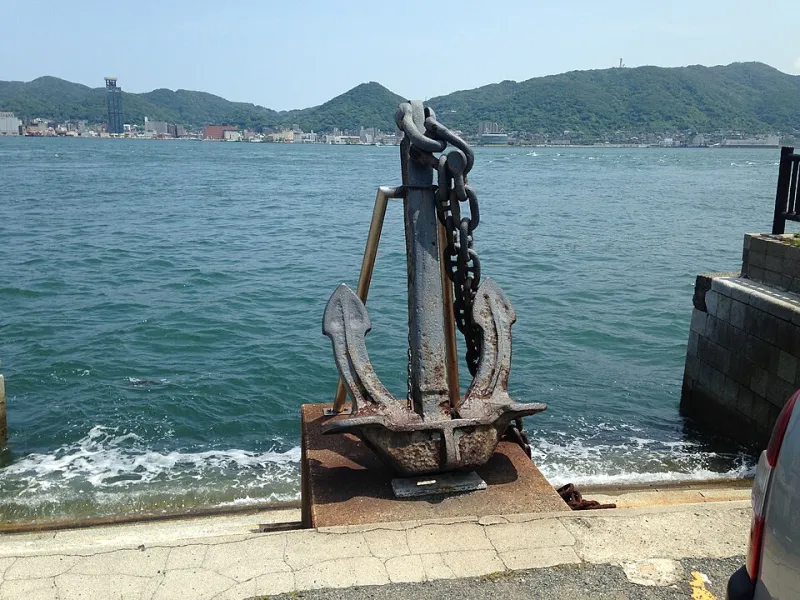
So why did empires bother with Shimonoseki at all? Geography, mostly. The Kanmon Strait is the maritime gateway between Japan's main island of Honshu and Kyushu — and between the Sea of Japan and the Pacific-side Seto Inland Sea. Every ship heading to or from the Asian mainland along Japan's western coast funnels through this narrow passage.
Control the strait, control the traffic. It's the same logic that made Gibraltar and the Bosporus famous, and it's why Shimonoseki kept showing up in the history books.
During the closing years of the Edo period, the domain that ruled here — the Chōshū clan, based just across the border in Yamaguchi — famously fired on Western ships in what became known as the Shimonoseki Campaign of 1863–64. American, British, French, and Dutch warships responded with a joint punitive expedition. Yes: Shimonoseki was once shelled by an international coalition that included the United States. The domain took the lesson to heart, pivoted hard toward modernization, and Chōshū men went on to basically run Meiji-era Japan.
Making a Day of It, History-Style
The nice thing about Shimonoseki for the history-minded traveler is that the sites are walkable and low-key. No crowds, no ropes, no velvet barriers — just you and the past.
Start at Shunpanrō Hall for the treaty story. Then wander to the Akama Shrine, whose crimson arches face the strait and which honors the Emperor Antoku, the child emperor who drowned nearby in the 1185 naval Battle of Dan-no-ura — a defeat that ended one imperial lineage's ambitions and became the stuff of legend, Noh drama, and local festival tradition.
That's the thing about this stretch of coast: you can stand in one afternoon over a battlefield from 1185, a bombardment from 1864, and a treaty signing from 1895. Three eras, one waterfront.
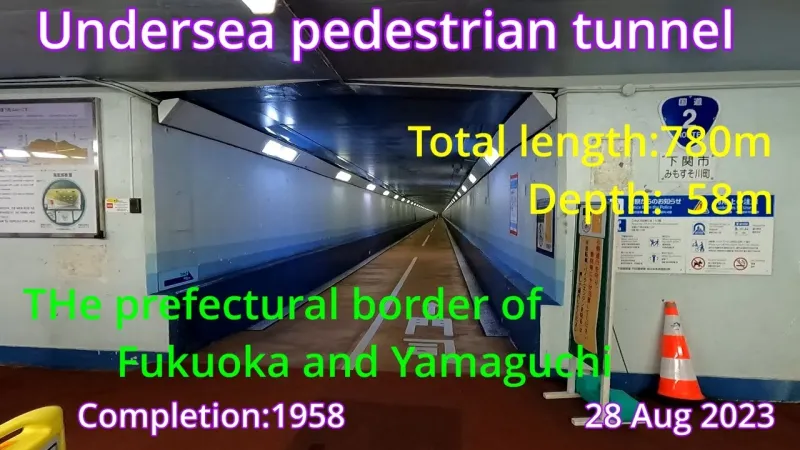
Cap it with the Kaikyō Yume Tower observation deck or a stroll across the strait on the pedestrian undersea tunnel if you want to literally walk between the two islands that shaped all of this.
A Different Kind of Japan Itinerary
If your US trip-planning instincts say "Tokyo, Kyoto, done," consider wedging two days into western Honshu and northern Kyushu instead. Shimonoseki pairs naturally with Kitakyushu across the water, and the shinkansen puts you within reach of Hiroshima and Fukuoka.
You won't find this city on many first-timers' lists — and honestly, that's part of the appeal. There's something satisfying about standing in an unassuming hall where the modern map of East Asia was drafted, then grabbing sushi at the market down the street like nothing happened.
Because that's Shimonoseki's whole deal: world-changing history, served without the velvet rope.