Watching the Devil's Whale: Inside the Strait's Secret Surf Scene
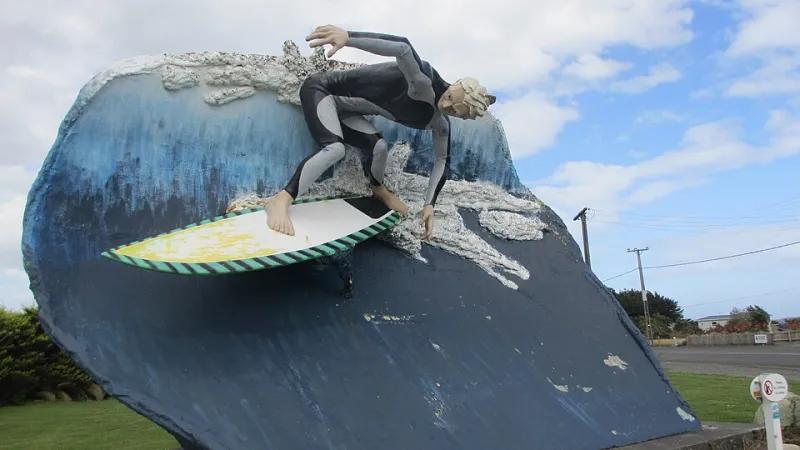
Photo: Ben Murrin, Public domain, via Wikimedia Commons
Ask around Shimonoseki for the name and you'll get one of two reactions: a blank stare, or a grin and a finger pointed out to sea. Geiunbai — roughly "the whale's breath" in local slang, though nobody agrees on the exact etymology — is the surf break hiding in plain sight at the western mouth of the Kanmon Strait. And like most things worth knowing about in this corner of Japan, it doesn't advertise itself.
A Wave Made by Geography, Not Storms
Most surf spots live or die by swell. Geiunbai plays a different game entirely. The Kanmon Strait narrows to barely 600 meters at its tightest point near Mekari, and all that water moving between the Seto Inland Sea and the open Genkai Sea has to go somewhere — fast. When a westbound tide collides with an incoming groundswell off the Sea of Japan, the result is a standing, shapeshifting wave that looks less like Hawaii and more like a river rapid that learned to curl.
That's the appeal. On a big tidal exchange, the current here can run faster than a person can swim, and the wave itself drifts, bends, and occasionally just relocates mid-session. Local surfers describe it as "riding a living thing." One veteran who's surfed the spot for three decades compares it to "snowboarding on a conveyor belt that changes its mind."
Finding It Without Making a Fool of Yourself
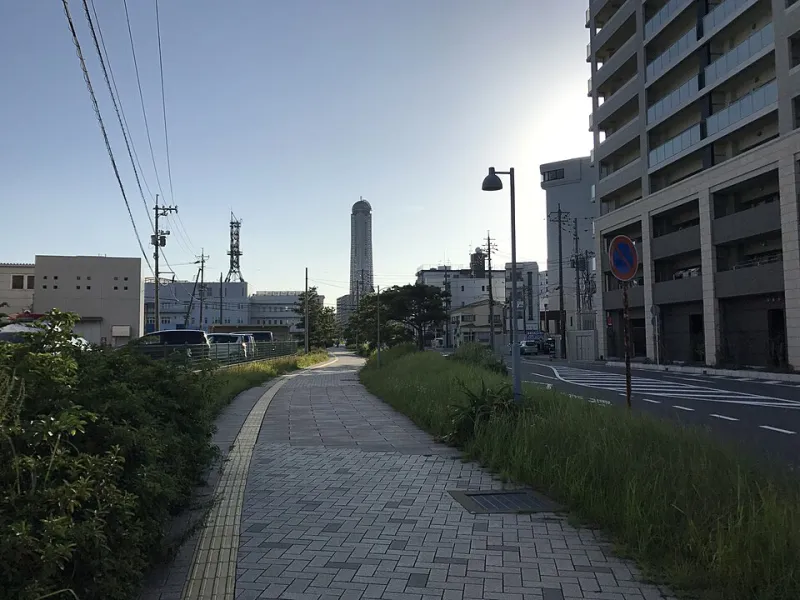
The break sits below the cliffs near the Mekari area, on the Shimonoseki side, within sight of the Kanmonkyo Bridge's enormous steel legs. There's no sign, no parking lot with a surf shop, no lineup of rental boards. Access is down a steep, unofficial path that locals would prefer you didn't learn from an article — so consider this your permission to simply watch.
And honestly, watching is the right call for most visitors. The best vantage is from the coastal viewpoints around Mekari Park, where you can look straight down on the action. Time your visit to a tide change — check a Kanmon Strait tide table, which the ferry terminals and fishing co-ops post daily — and if the water's working, you'll see a scatter of dark wetsuits appearing as if from nowhere.
The crowd, on a good day, numbers in the single digits. On a great day, maybe fifteen. That scarcity is deliberate.
The Etiquette of a Closed Circle
American surf culture has its own unwritten rules — don't drop in, don't snake, respect the local. Japan's version is dialed to eleven, and Geiunbai is about as local as it gets. Many of the regulars have known each other since childhood. Some are second- and third-generation surfers whose fathers surfed the same current.
If you're a competent surfer and you want to try, the path in is the same everywhere in Japan: slowly. Show up alone or with one friend, not a vanload. Watch for a full session before you even unzip your wetsuit bag. Greet people on the beach — a simple nod and "konnichiwa" goes further than you'd think. And when you paddle out, sit wide. Take the scraps. Let the locals have every set wave for your first few sessions, and offer nothing but friendliness in return.
What you should never do is show up with a drone, a camera, or an audience. This is a break that has stayed under the radar precisely because nobody treated it as content.
When Not to Go
Even watching has safety considerations. The currents at the strait's mouth are genuinely dangerous — swimmers are prohibited along most of this coastline, and kayakers are strongly advised against entering the main shipping channel. If you're observing from shore, stay behind barriers and off the rocks below the cliff paths, especially on a spring tide.
Winter is prime season (typhoon swell plus big tidal exchanges), but it's also cold, windy, and when the locals are most territorial about their limited windows. For a first look, aim for a mild morning in October or April, when the light is good, the air is clear, and the surfers are more likely to chat between sets.
Why It Matters
There's a broader point here about the Kanmon region. This is a strait that has been worked — ferried, fished, fought over, tunneled under — for centuries. Geiunbai is a reminder that the water still keeps some secrets, and that the best travel experiences in western Japan often come from standing still and watching what the locals watch.
You may never ride the Devil's Whale. But catching a glimpse of it — a lone figure carving across a current that once sank warships — is its own kind of souvenir.