Watchtower Ridge: The Half-Day Hike Where the Strait Spreads Out Below You
Photo: Jill DeVito, PhD, CC BY-SA 4.0, via Wikimedia Commons
Most visitors experience the Kanmon Strait from sea level — from the Karato market stalls, the waterfront promenade, or the deck of a ferry chugging between Honshu and Kyushu. That's fine. But there's a second, quieter way to see this narrow ribbon of water, and it starts at the base of a hill with a trailhead sign most tourists walk right past.
The ridgelines flanking the strait have been watching over this passage for centuries. Feudal lords built signal towers here. Wartime spotters scanned the water for ships. Today, those same high points — some marked by ruined foundations, some by nothing more than a bench and a viewfinder — serve as the region's best free observation decks. And unlike the popular Kaikyo Yume Tower downtown, you'll likely have them to yourself.
Why Hike When You Could Just Look Up?
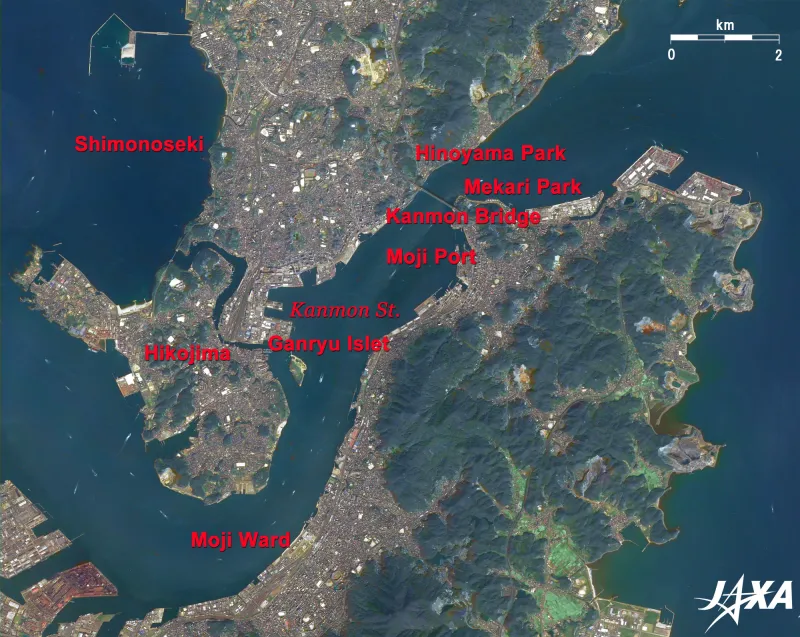
Fair question. Shimonoseki has plenty of easy viewpoints accessible by elevator or escalator. But the strait is a working waterway, and its drama — container ships threading a channel barely a kilometer wide, fishing boats cutting across tanker wakes — reveals itself differently from above. From the clifftop lookouts, you can watch the whole choreography at once: vessels queueing at the narrow Mekari squeeze, the Kanmonkyo Bridge arcing overhead, two cities (Shimonoseki and Kitakyushu) facing each other across the water like old sparring partners.
It's the difference between watching a game from the sidelines and seeing the whole field from the nosebleed seats — except these nosebleed seats cost nothing and come with a forest walk attached.
The Route: Forest Path to Clifftop Ruin
A classic half-day option starts near the Shimonoseki side and climbs through residential backstreets into cedar-shaded trails within about fifteen minutes. The grade is steady but forgiving — think intermediate trail in a US state park rather than anything requiring gear. Wear real walking shoes; the stone steps get slick after rain.
Along the way you'll pass the remnants of watch posts: old stone foundations, moss-covered concrete bunkers from the World War II era when spotters tracked every ship entering the strait, and occasional historical markers (in Japanese — screenshot-translate them beforehand). The ruins are understated. No ropes, no plaques with English text. Just crumbling masonry and the creeping sense that people have stood on this exact spot, watching the same water, for hundreds of years.
The payoff comes in stages. First, glimpses of blue through the trees. Then a clearing. Then the full panorama: the strait laid out end to end, ships small enough to cover with your thumb, and on clear days the mountains of Kyushu stacked against the horizon.
Timing Your Climb
Morning is your friend, for two reasons. One, the light hits the Kyushu side beautifully before noon, and haze tends to build in the afternoon. Two, you'll earn your lunch — and Shimonoseki rewards hikers. Come down around 11:30 and head straight to Karato Market, where the morning's tuna auction leftovers turn into cheap, excellent sushi by late morning.
If you're a sunset person instead, flip the plan: start the hike mid-afternoon, time your summit for the golden hour, and watch the strait switch on — bridge lights, harbor cranes, city lights on both shores — before descending with a headlamp. Bring that headlamp regardless. Trail lighting is minimal and the steps come down steeper than they went up.
Practical Notes for US Travelers
- Getting there: Trains and buses reach the trail access points from Shimonoseki Station; a taxi to a higher trailhead saves forty-five minutes of city walking if your legs are on a budget.
- Water and snacks: Vending machines exist near the base but thin out fast on the ridge. Carry what you need, Japanese-hike style — pack out your trash.
- Weather check: The trail closes itself in bad weather whether you like it or not (slippery stone steps). Skip it in rain or the day after heavy rain.
- Navigation: Signage is Japanese-only in stretches. Download an offline map of the area and pin your summit before you lose signal — coverage is patchier than you'd expect a few hundred feet up.
- Time budget: Two to four hours door to door, depending on your pace and how long you linger at the top. Add time if you're pairing it with Karato lunch, which you should.
The Quiet Payoff
There's a particular kind of travel moment that doesn't photograph well: standing on a hill that once held a watchtower, watching a 200-meter cargo ship nudge through a strait that empires once fought over, with nothing but cicadas for company. You can't bottle it, and your Instagram won't do it justice.
But after a few days of terminals, markets, and tunnels — all excellent — the ridgeline gives you the one thing sea level can't: perspective. Both islands at once. The whole strait, working, in a single glance.
Lace up. The view's been waiting a few hundred years.