Wake Up to Freighter Horns: Hotels Where the Kanmon Strait Is the Main Event
Photo: Basile Morin, CC BY-SA 4.0, via Wikimedia Commons
There's a certain kind of hotel morning in Tokyo or Osaka: you open the curtains, see another building, and shrug. Now compare that to waking up in Shimonoseki, pulling back the blinds, and watching a 200-meter container ship slide through a strait barely a kilometer wide, horn barking at a fishing boat that got too cozy with the shipping lane.
That's the pitch for sleeping in the Kanmon region. The strait isn't a backdrop here — it's a working waterway that never really turns off, and if you book the right room, it's your alarm clock, your evening entertainment, and your night-light all in one.
Why a Strait Beats a Skyline
Roughly 500 vessels pass through the Kanmon Strait every single day. Cargo ships, tankers, ferries, fishing boats, the occasional cruise liner — all threading the same narrow channel between Honshu and Kyushu. From a hotel window, this is genuinely mesmerizing in a way a skyline isn't. It moves. It honks. It changes with the tide and the weather.
At night, the water becomes a string of navigation lights, and the Kanmonkyo Bridge glows in shifting colors on the Shimonoseki side. Think of it as the anti-resort vacation: no infinity pool required, just a window and a body of water with somewhere to be.
Shimonoseki Side: Honshu, Facing the Traffic
The best vantage points in Shimonoseki cluster around the waterfront near Karato and the Akama Shrine area. Several mid-range and business hotels here advertise "ocean view" rooms, but read carefully — some face the open Sea of Japan side rather than the strait itself.
What to request: Ask for a strait-facing (kaikyo) room on a higher floor, ideally overlooking the Kanmonkyo Bridge. Japanese hotel staff are used to specific requests, and a quick note at booking — even in simple English — usually gets it done. Business hotels in this price range are the norm in Japan: compact, spotless, with the kind of firm bed that US travelers either love or learn to love.
What you'll see: The Karato waterfront, the hourly dance of ships, and the bridge light show after dark. In the early morning, watch the fishing fleet head out — it's the same fleet supplying the market you'll probably hit for breakfast.
Mojiko Side: Kyushu, Watching Honshu Glow
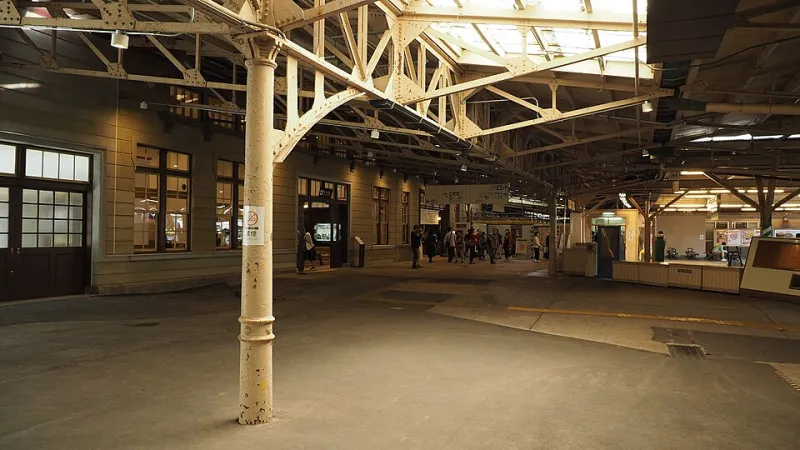
Cross the strait and Mojiko offers the flip side of the view: a historic brick port district looking back across the water at Shimonoseki. This is the moodier, more atmospheric option. The red-brick warehouses and the old station building light up at night, and the reflection on the water is the kind of thing that makes your phone camera look better than it should.
Mojiko's lodging scene is smaller — a mix of a well-known harbor-side hotel and smaller inns — so book earlier, especially around the summer fireworks festival when the strait's banks fill up fast.
What to request: A harbor-side room facing the water, not the station side. Higher floor if available; the elevated angle lets you watch ships entering and leaving the channel rather than just the docks.
Timing Your Stay
Any night works, but a few calendar notes for US travelers:
- Summer fireworks nights (early August) are spectacular from a strait-view room — you may not even need to join the crowds on the seawall. Book months ahead.
- Weeknights mean better rates and quieter waterfronts on both sides.
- Clear winter mornings often deliver the best light and visibility, with fewer haze days than summer.
A Few Practical Notes
Business hotels here run comfortable but compact — if you're used to US room sizes, expect a tighter footprint and pack accordingly. Most offer luggage storage before check-in, so you can drop bags and go watch ships from ground level. And while English is hit-or-miss, translation apps plus a printed room request in Japanese ("strait view, high floor please") solves nearly everything.
One last tip: leave the curtains open. The ships run all night, the bridge changes color on a cycle, and the 3 a.m. sight of a tanker sliding silently past your window is the kind of travel moment you don't plan for — you just have to be in the right room.