Last Light at the Old Terminal: An Evening in Mojiko, When the Port Outshines the Big City
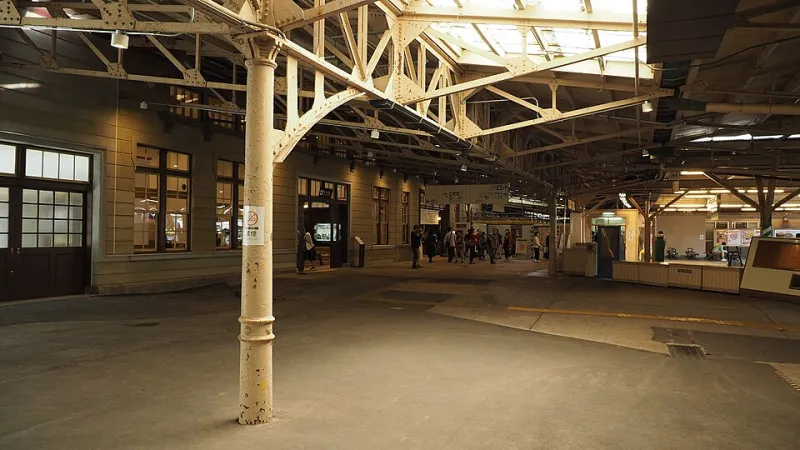
Photo: Ka23 13, CC BY-SA 4.0, via Wikimedia Commons
There's a moment that happens in Mojiko right around 6 p.m. The tour buses pull out. The day-trippers from Kitakyushu drift back toward the monorail. And the whole port town — all brick warehouses and sea breeze — exhales.
If you've ever rolled through Tokyo's Shinjuku crossing at rush hour and thought, this is electric but I need to lie down, Mojiko after dark is the antidote. It's western Japan's best-kept evening secret, and it starts at a train station that looks like it got lost on the way to Amsterdam.
A Station That Thinks It's a Cathedral
Mojiko Station opened in 1914, and unlike most "historic" stations in Japan — where the original building met the wrecking ball decades ago — this one survived. It's a two-story neo-Renaissance pile of red brick and white stone, with arched windows, a domed ceiling in the ticket hall, and the kind of stonework that makes you wonder if the architect had a grudge against efficiency.
By day it's busy. By night, it's something else entirely. The facade glows warm amber against a deepening blue sky, and the crowd thins to a handful of couples, photographers with tripods, and the occasional rail otaku photographing the vintage locomotive parked out front.
Fun fact for the Americans in the room: this station once processed international passengers heading to the U.S. and South America — including emigrants bound for Hawaii and the West Coast in the early 1900s. Standing in the restored booking hall at night, you can almost hear the echo of steam whistles and tearful goodbyes.
Coffee, Cake, and a Time Machine
Right across the plaza sits Café Blue Bird, a faithful recreation of a café that operated here in the 1920s and 30s, when Mojiko was a cosmopolitan port and Western-style coffee houses were the height of sophistication. Order the honey toast and a cup of their signature blend, sink into a wooden chair, and pretend it's 1926.
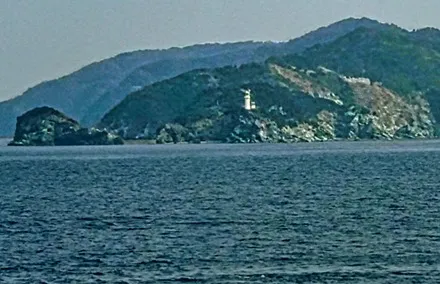
If the café is winding down, wander a block toward the water. The former Osaka Shosen Building and the row of brick warehouses along the harbor are softly lit, and the promenade is almost entirely yours. On a clear night you can see the lights of Shimonoseki, Honshu, twinkling straight across the Kanmon Strait — a reminder that you're standing on Kyushu, staring at Japan's main island, separated by water narrow enough to shout across.
The View That Sells the Whole Evening
The real show is the strait itself. Cargo ships and small ferries slide silently through the channel all night, their deck lights reflecting on black water. There's no ticket needed, no crowd, no fence — just a seawall, a breeze, and one of the busiest shipping lanes in Asia performing a slow-motion ballet for an audience of a dozen.
Bring a light jacket. The strait has its own microclimate and it gets real after sunset, even in summer.
Timing Your Ride Back to Honshu
Here's the practical part, because this is a travel site and someone always asks.
Option 1: The train. The JR Kagoshima Line connects Mojiko to Kokura in about 15 minutes, and from Kokura you can hop the Shinkansen or, better, the local JR Sanyo Line to Shimonoseki. Trains run into the evening, but the frequency drops off — check the last departure (usually around 10-11 p.m. toward Kokura) before you settle into that second coffee.
Option 2: The undersea tunnel walk. Feeling ambitious? The free Kanmon Pedestrian Tunnel runs beneath the strait — about 15-20 minutes of stairs and corridor, and you surface on Honshu. It closes at 10 p.m., so this is a pre-dinner adventure, not a midnight one.
Option 3: The ferry. The small Kanmon Ferry crosses the strait in five minutes. Service winds down in the evening, so treat it as a golden-hour crossing — riding it as the terminal lights come on behind you is arguably the single best photo op in the whole region.
Why Bother With a Small Town at Night?
Because the big-city evenings — Shibuya, Dotonbori, all of it — are already on your itinerary, and they'll still be there. Mojiko's evening isn't about spectacle. It's about standing on a quiet seawall between two islands, coffee in hand, watching freighters cross a strait that has moved people, goods, and empires for a thousand years.
Tokyo's neon never lets you hear the water. Mojiko doesn't shut up about it — in the best way.